
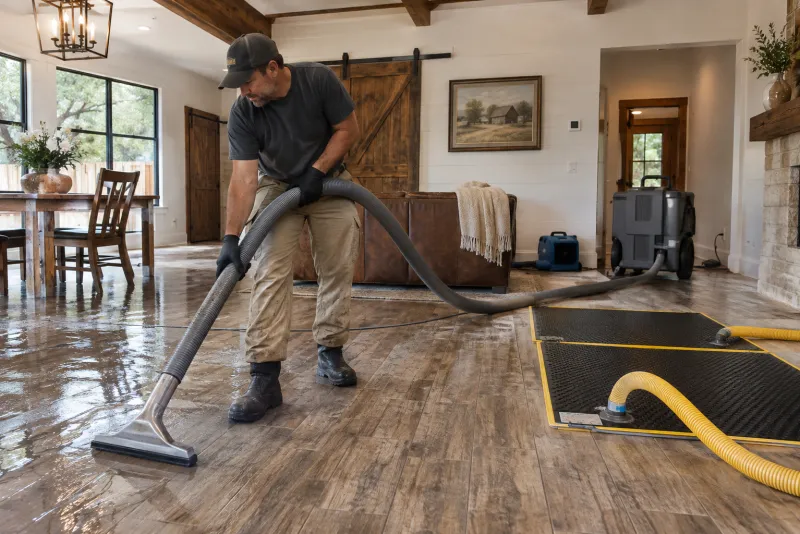
Emergency Water Extraction
Truck-mount extraction and moisture mapping for standing water in finished homes and rural properties.
Get help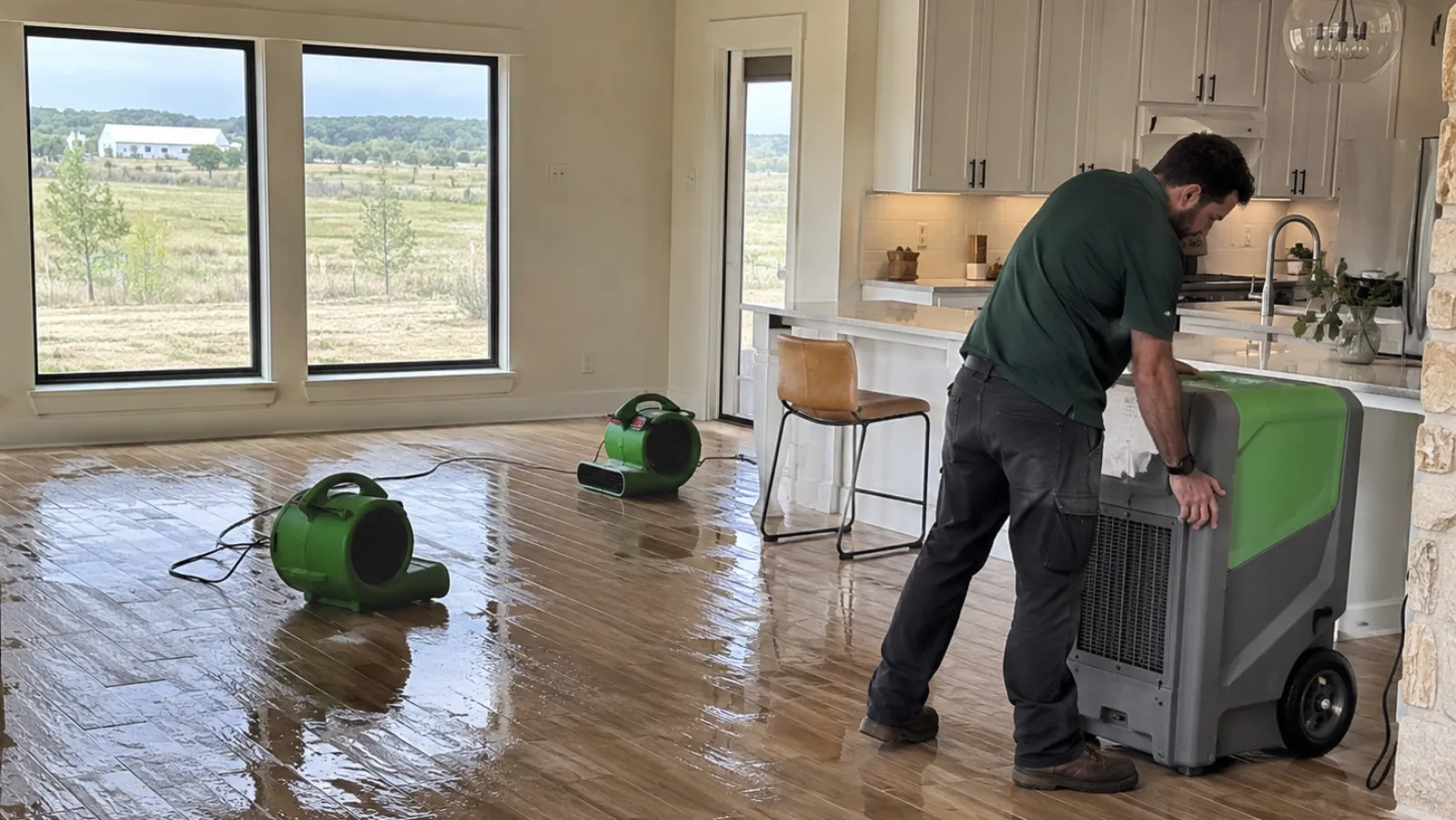
Standing water, a slab leak or a pipe that split overnight does not wait for business hours. We answer 24/7, extract the water, dry the structure to verified readings and organize the loss documentation for your insurance claim.
Call (512) 555-0144 Or see how to reach dispatch. Calls are answered 24/7.Liberty Hill sits in western Williamson County where the Hill Country meets fast suburban growth. Santa Rita Ranch, Rancho Sienna and the area around Liberty Hill High School have added modern slab homes along State Highway 29, while the roads beyond town still lead to acreage properties with private wells, septic systems and long supply runs.
The water problems here follow both construction and weather. Limestone and clay beneath local foundations react differently to prolonged drought and sudden rain. The San Gabriel River and Hill Country drainage can rise quickly in major storm events. Following the July 4 weekend floods in 2025, a Liberty Hill City Council action on July 23 waived certain building and planning fees for flood-related rebuilding for 180 days.
Ice storms can split attic lines, outdoor spigots and well-house plumbing. Summer storms and hail can open a roof or drive water under a door. We classify the water, map moisture with meters and a thermal camera, extract and dry the structure, then keep daily readings until materials are verified dry. A ceiling stain, wet cabinet toe kick or warm patch of flooring can hide a larger loss.
One crew from the first extraction through the final repair. No handoff to a separate company halfway through the job.
Truck-mount extraction and moisture mapping for standing water in finished homes and rural properties.
Get help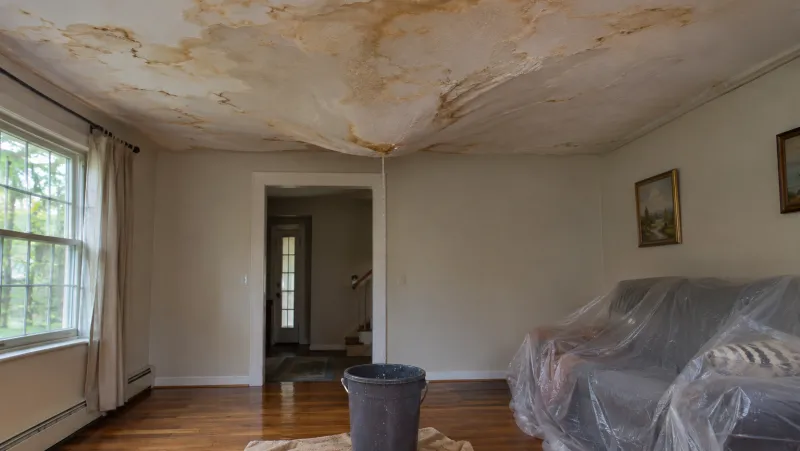
Slab leaks, runoff at foundations and moisture beneath wood, tile and other finished floors.
Get help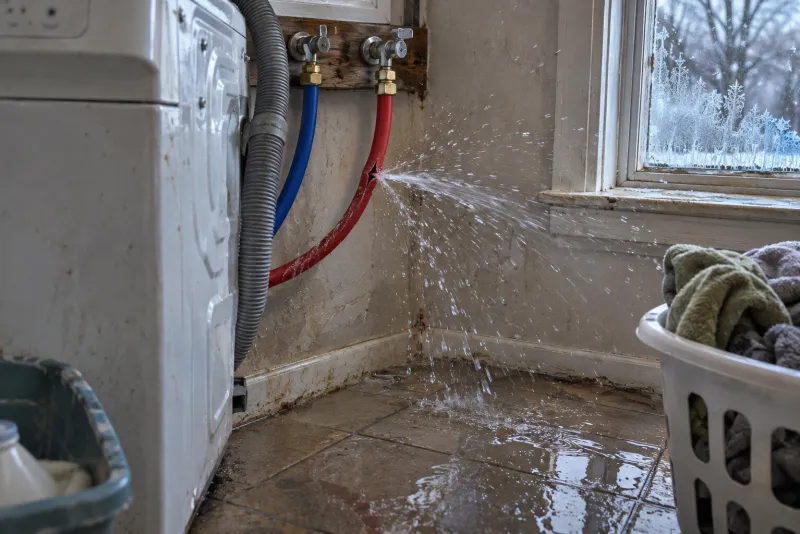
Hard-freeze splits, attic or garage water-heater failures and ceiling stains traced to the source.
Get help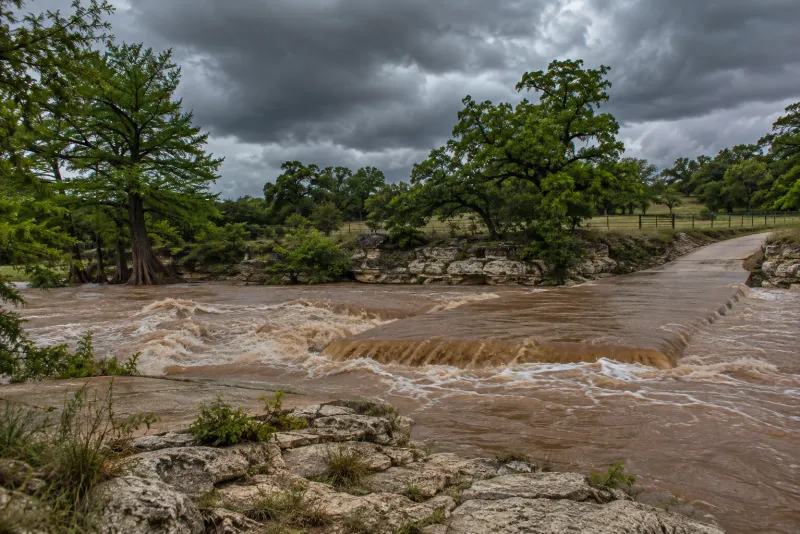
Hail-damaged roofs, wind-driven rain and ceiling leaks after summer thunderstorms or ice storms.
Get help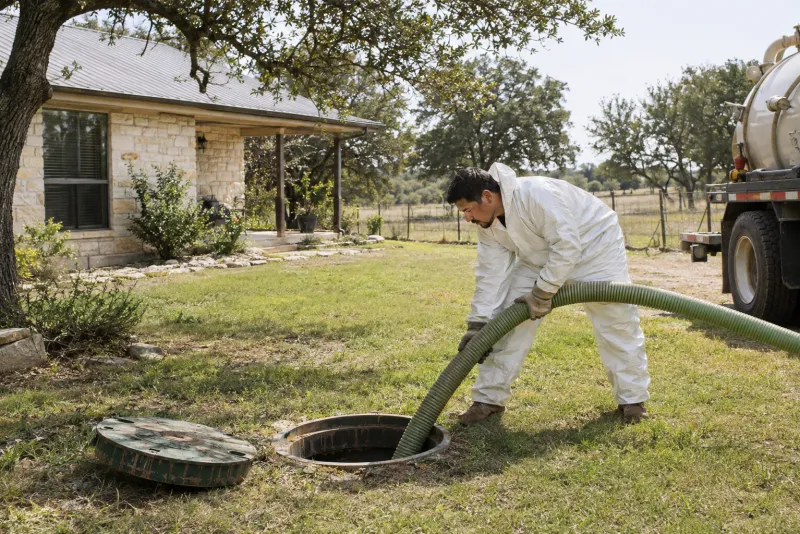
Contaminated septic and sewage losses handled with containment, antimicrobial cleaning and controlled removal.
Get help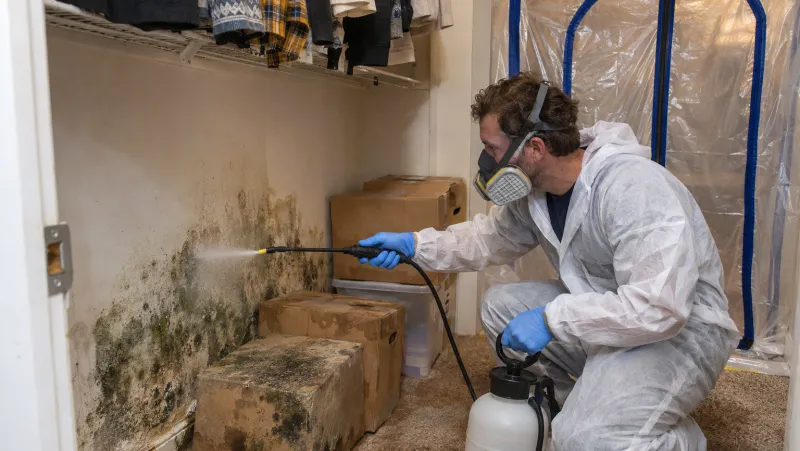
Containment, HEPA filtration and repairs after drying has been verified with readings.
Get help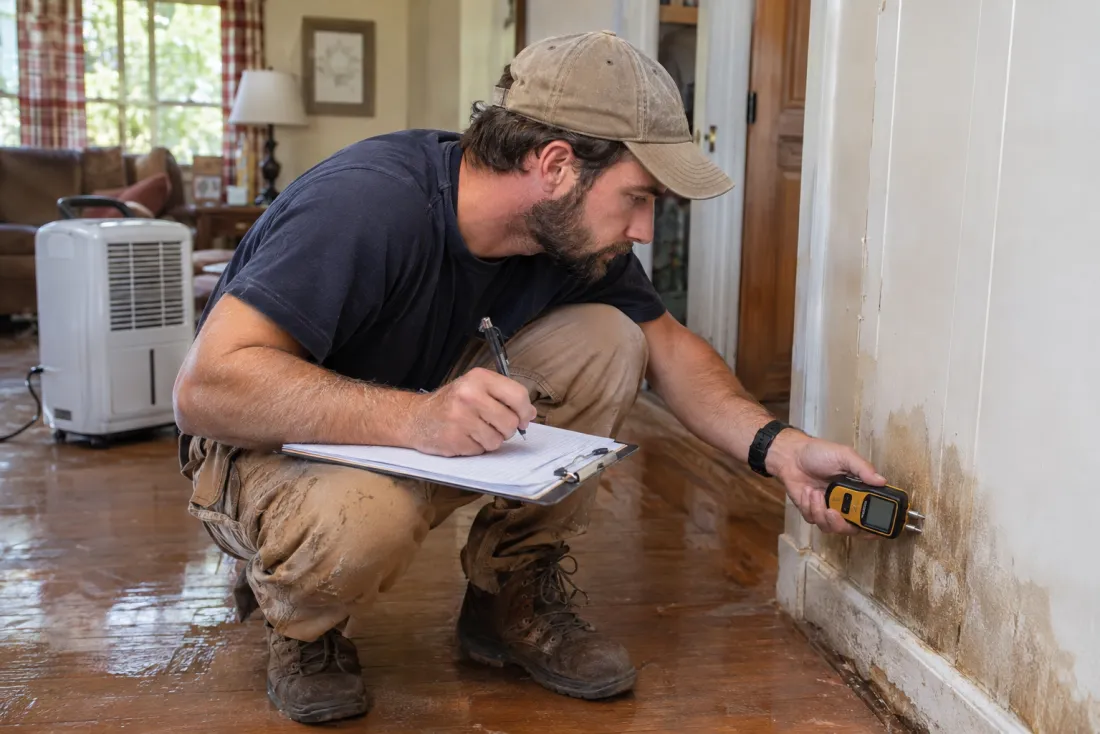
The first visit is an inspection, not a sales pitch. We find the source, document the water category and class, map moisture, and explain the drying or removal plan before anything is torn out.
We ask what is wet, when it started, whether the water is clean, grey or contaminated, and whether the property has a well or septic system. You get shut-off and safety guidance.
Meters and a thermal camera show how far the water travelled. We document the IICRC S500 water category and class, photograph materials and record readings room by room.
Standing water comes out first. Saturated carpet, pad and material that cannot dry in place are removed and documented. After a flood or contaminated loss, removal can include a flood cut at least 12 inches above the water line where conditions require it.
Air movers, dehumidifiers and floor-drying systems are sized to the space and checked daily. Equipment stays until readings verify that materials meet the dry target.
Contents inventory, pack-out needs, drywall, trim, flooring and paint are organized after drying. We provide the documentation your adjuster needs to review the loss and deductible.
Water hides in cavities, under flooring and behind finished walls. These are the clues that usually mean a moisture map is needed.
Describe what you see. We will tell you whether it can wait for a scheduled visit or needs a crew today.
Call now
Liberty Hill is not a generic suburb. The housing runs from rural properties and older homes near town to Santa Rita Ranch, Rancho Sienna and other new subdivisions along SH 29. The water problems follow the building, the terrain and the local weather.
We plan around SH 29, US 183 and RM 1869. We ask about slab or pier-and-beam foundations, septic systems, wells, gated access and drainage on sloped lots before dispatch, because those details change the equipment list.
You get one point of contact, written moisture readings, contents documentation and a scope you can send to your adjuster. Coverage and deductible decisions stay with the insurer, and we explain the work before it starts.
Eight communities, one dispatch area. If you are just outside the list, call and ask.
Water extraction, drying and repair for homes and commercial properties.
Water extraction, drying and repair for homes and commercial properties.
Water extraction, drying and repair for homes and commercial properties.
Water extraction, drying and repair for homes and commercial properties.
Straight answers about timing, insurance and what can be saved.
Calls are answered around the clock, including weekends and holidays. Arrival depends on weather, road conditions, crew location and rural access. Dispatch gives you a realistic window once we know the address, source and whether water is still moving.
Sudden plumbing failures are commonly handled differently from surface-water flooding, long-term leaks or neglected maintenance. We organize photos, moisture maps, contents inventory and drying records for your adjuster. Ask your carrier whether direct billing is available and what deductible applies before authorizing work.
Tell us at the start. A long private supply run or well-house leak may need pump shutoff guidance, while a septic backup is contaminated category 3 water that needs containment and antimicrobial cleaning. Qualified well and septic contractors repair those systems; we address the building damage.
The schedule depends on water category, class, the materials affected and humidity. We take daily readings and do not remove equipment until the affected materials meet the dry target. Wood, tile, dense assemblies and crawlspaces can need specialized floor-drying or longer monitoring.
Mold risk rises when moisture remains in a wall, floor or insulation. Fast extraction, containment where needed and daily moisture checks reduce the risk. If materials cannot be dried to target, they are removed rather than enclosed wet.
Stop the source if it is safe: shut off the main water valve, well pump or breaker feeding a leaking appliance. Move electronics and paperwork off the floor. Do not walk through standing water near outlets, and do not use a household vacuum for extraction. Take photos before anything is moved.
Yes. Sewage, septic, ground-surface water and other category 3 losses require containment, personal protective equipment and antimicrobial cleaning. Porous materials that contacted the water are removed rather than dried and reused.
Yes. We coordinate access with the responsible party, document the affected rooms and provide drying records. The owner, manager or authorized tenant must approve the scope and payment arrangements.
A burst supply line and water entering from rising or flowing ground water are commonly handled under different policy terms. We document the source and condition of materials, but coverage decisions belong to your insurer.
Leander, Georgetown, Cedar Park, Bertram, Burnet, Florence, Marble Falls, Round Rock and surrounding Hill Country communities. If you are just outside that list, call and ask.
Request service
Call for active water, estimates, scheduling and questions. If water is near outlets, a panel or a gas appliance, leave the area and call from a safe place.
One call gets you shutoff guidance, an arrival window and a plan for Liberty Hill. Have your address and any insurance claim number ready.
Call (512) 555-0144Tap to call from your phone.
Call now. We will tell you what to shut off, what to move and what to leave alone until the crew arrives.
Call (512) 555-0144